
Families caring for a child with developmental needs often have questions about OPWDD, therapy, home care, and what support may be available.
Our dedicated team helps parents understand the next steps, including OPWDD enrollment, Code 95, ABA Therapy, PT, OT, and Speech Therapy coordination.
We help families understand eligibility, paperwork, evaluations, and next steps.
In-home caregiver support, including HHA training for family-recommended caregivers.
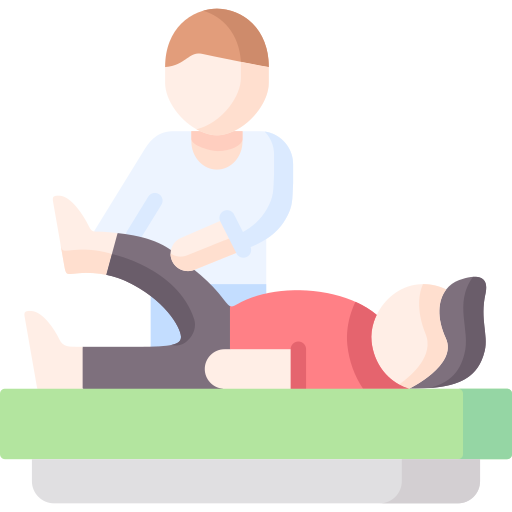
At-home therapy to help children move, communicate, learn, and grow. Their future matters to us.

Support for learning, behavior, communication, and daily routines to support your child.
The OPWDD process can feel confusing and overwhelming. Our dedicated team guides families through each step, so you always know what comes next.
We explain what may be needed to qualify.

We help families stay organized and prepared.
We support you through every stage of the process.
We help link you with care managers and services.


Eligible families may qualify for up to 84 hours per week* of home health aide services, depending on eligibility and approval.

Use someone you already know and trust to care for your child.

We sponsor their training through our HHA Training School.
Once certified, they can keep their HHA certificate for life.
Our multidisciplinary therapy team combines Physical Therapy, Occupational Therapy, and Speech Therapy to help children build confidence, independence, communication skills, and everyday functional abilities through personalized, family-centered care plans designed around their unique goals.
Improve balance, coordination, strength, and movement.
Develop everyday skills including dressing, handwriting, and self-care.
Strengthen communication, language, feeding, and social interaction.
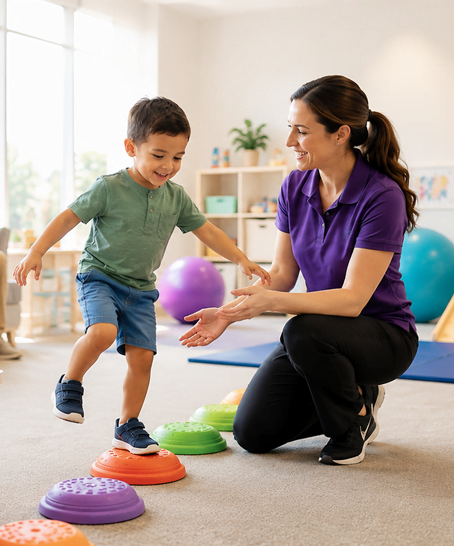
Schedule an evaluation and receive a personalized therapy plan for your child.

ABA therapy can help children build important skills, improve communication, manage behaviors, and feel more confident in everyday routines.




A few steps, and we’ll be right beside you for all of them.


OPWDD determines eligibility through a formal review process. Families may need to provide evaluations, records, and documentation showing a qualifying developmental disability and functional limitations.
OPWDD eligibility is based on whether the child has a qualifying developmental disability under New York rules.
The condition generally must have originated before age 22 and result in substantial functional limitations.
Families may need diagnostic evaluations, assessments, medical records, school documents, or related reports.
OPWDD’s Front Door is the access point families use to learn about services and begin the eligibility process.
OPWDD is the New York State Office for People With Developmental Disabilities. It funds and oversees services that help children and adults with developmental disabilities build skills, gain independence, and get the support they need to thrive at home and in their community.
A child generally needs a diagnosed developmental disability, such as autism, cerebral palsy, an intellectual disability, or epilepsy, that began before age 22, is expected to be long-term, and significantly affects daily life. Younger children with substantial delays may sometimes qualify provisionally. OPWDD makes the final decision, and our team can help you understand where your child may stand.
Enrollment runs through a Care Coordination Organization, where a care manager helps you apply and submits your documents to your regional OPWDD office for review. It can feel like a lot at first, so we walk you through each step, from gathering paperwork to understanding the decision once it arrives.
Applied Behavior Analysis (ABA) is a widely used, well-researched approach for supporting children on the autism spectrum. It breaks larger skills into small, achievable steps and builds them up gradually, helping children grow in communication, social skills, and everyday independence, all while supporting parents and caregivers too.
Every child is different, so there's no one-size-fits-all answer. ABA can be a good fit for many children on the autism spectrum, but the best way to know is to talk with our team about your child's specific needs and goals so we can help you understand the options.
In many cases, yes. Families often combine the supports their child qualifies for to build a fuller picture of care. Our team can help you understand how different services may fit together and guide you toward the right next step for your family.
With offices across Brooklyn, Queens, Staten Island, Bronx, Manhattan, and Nassau, our team is here to help families get started with care.
3820 Nostrand Avenue, Suite 106 Brooklyn, NY 11235
1035 Brighton Beach Ave, Suite 1 Brooklyn, NY 11235
95-20 63rd Rd Rego Park, NY 11374
520 Franklin Ave Garden City, NY 11530
Website Designed by IL Webdesign