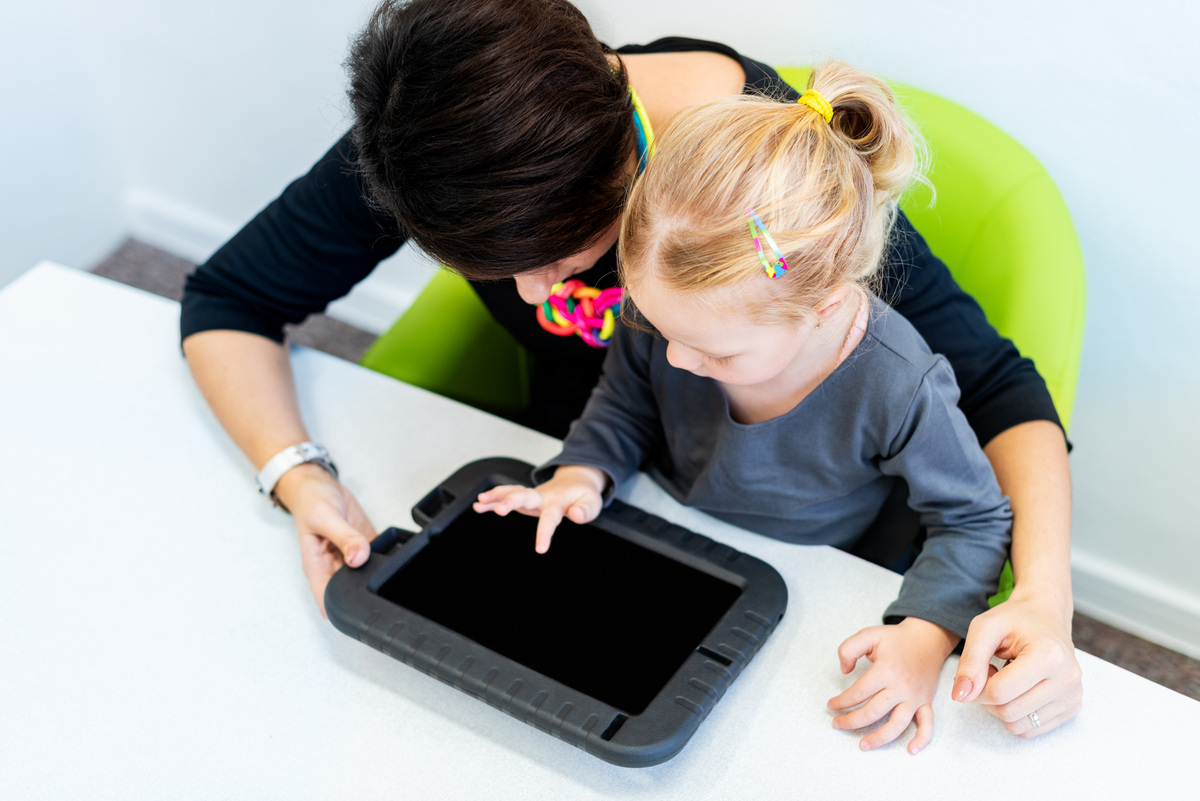
If your child communicates through gestures, sounds, or a device instead of spoken words, Welcome Care is ready to help, just off Queens Boulevard. Waiting months for a speech therapy opening, piecing together support from several different offices, or hearing “AAC” without anyone explaining what it means can leave families feeling stuck before they’ve even started.
Welcome Care has supported New York families since 2003. Licensed by the New York State Department of Health, our Queens team treats communication as its own priority rather than an item on a longer checklist.
Call or fill out a short form to get started | 95-20 63rd Rd, Suite E, Rego Park, NY 11374 | Monday–Friday, 9:00 AM–5:00 PM
If your child communicates through gestures, sounds, or a device instead of spoken words, Welcome Care is ready to help, just off Queens Boulevard. Waiting months for a speech therapy opening, piecing together support from several different offices, or hearing “AAC” without anyone explaining what it means can leave families feeling stuck before they’ve even started.
Welcome Care has supported New York families since 2003. Licensed by the New York State Department of Health, our Queens team treats communication as its own priority rather than an item on a longer checklist.
Call or fill out a short form to get started | 95-20 63rd Rd, Suite E, Rego Park, NY 11374 | Monday–Friday, 9:00 AM–5:00 PM
Licensed since 2003 NYS Department of Health licensed |
Multilingual care team Russian, Hebrew, Urdu, Chinese, Spanish, and more |
In-home practice Communication support built into daily routines |
A child who doesn’t use spoken words still has plenty to say. The goal isn’t to force speech. It’s to give your child a reliable way to be understood, whether that’s gestures, pictures, a tablet app, or eventually words.
Some children are still very young and just starting to show signs of a communication delay. Others are older and have been in speech therapy for years without much progress. Both situations are common, and neither one means it’s too late to try something new.
Our team typically works on:
According to ASHA, augmentative and alternative communication does not replace speech attempts. In many cases it supports them. Children often become more comfortable attempting speech once they have a reliable backup way to communicate. Our PT, OT & Speech Therapy page covers how these sessions are typically structured.
Some children eventually add spoken words. Others build a lasting communication system that isn’t speech at all. Both outcomes count as real progress, and families rarely know in advance which path their child will take. Our Pediatrics and OPWDD Special Needs page covers how communication support connects with other services your child may need.
Queens is home to families who speak dozens of languages at home. That shapes what communication support actually needs to look like. A child learning to communicate in a bilingual household needs a plan built around that, not a generic approach designed for English-only households.
According to HealthyChildren.org, children who don’t communicate as expected can often be helped once the right tools and support are in place. Families in Forest Hills, Elmhurst, and Jackson Heights are often juggling school evaluations and therapy schedules, with translation adding one more thing to manage on top of an already full week.
Waiting lists for speech therapy in New York City can stretch for months. Families sometimes piece together support from several places just to keep momentum going, which gets tiring fast when nobody’s coordinating the pieces together.
Some families also worry they waited too long to start. In most cases, that isn’t true. Communication support can help at almost any age, even if a formal diagnosis took a while to arrive.
You may want to reach out if:
Most families start with a conversation, not a formal evaluation. That first call is usually shorter than people expect, and nobody is asking you to have all the answers upfront before you dial the phone. We figure out the rest together.
Call our office or fill out a short form. We ask what your child currently uses to communicate, even if that’s mostly gestures, sounds, or frustration when they can’t get their point across. There’s no wrong answer here, so don’t worry about how it sounds when you describe it.
If your child already has a speech evaluation or an IEP goal, we look at that first instead of starting from scratch. This saves time and avoids repeating testing your child has already been through, which families often appreciate more than anything else in the process.
Some children respond well to pictures. Others do better with a tablet app or simple signs. For children also working on behavior and independence goals, our ABA Therapy program often incorporates the same communication tools we use here. We test a few approaches rather than committing to one right away, since guessing wrong early can slow everything down later on and cost weeks of progress in the meantime.
Your child’s skills will change over time, and the tools and goals change too. We keep adjusting instead of locking into one plan for good, since what works this year may need to shift again the next, sometimes more than once along the way.
Call (718) 669-7788. Our office is at 95-20 63rd Rd, Suite E, Rego Park, NY 11374.
Welcome Care has supported New York families since 2003. Our Queens office treats communication as its own priority, not an afterthought tied to another service. Getting nonverbal support in Queens shouldn’t mean waiting months just to start, and with our team, it usually doesn’t take nearly that long.
We build around how your family already communicates, not a standard script pulled from a manual.
Our team can practice communication tools in the language your child hears most at home, so nothing gets lost in translation between sessions.
Parents and siblings get coached directly, so progress doesn’t stall between visits or fall apart once therapy ends for the day.
Call (718) 669-7788 or fill out a short form on our site. We’ll ask about your child’s current communication and schedule a first conversation with our team. Most families hear back within a day or two, so you’re not left waiting to find out what happens next.
There’s often overlap between the two, and it’s rarely an either-or decision. Our team can assess where your child is and recommend an approach that fits, rather than assuming one path applies to every child. Many families end up combining both once they see what actually helps.
That happens more often than people expect, and it doesn’t mean AAC isn’t right for your child. Sometimes the tool just wasn’t the right match. We can look at what was tried before and adjust the approach instead of starting from zero.
Our office is at 95-20 63rd Rd, Suite E, Rego Park, NY 11374, just off Queens Boulevard and close to the M and R subway lines. Most families driving in from Forest Hills, Elmhurst, or Jackson Heights reach us in under 15 minutes, and the Long Island Expressway makes it an easy trip from Corona and Middle Village as well.
Families from these neighborhoods reach us easily:
If you’re coming from somewhere else in Queens, don’t rule us out. Many families travel a little further once they’ve had trouble finding the right communication support closer to home.
Business Hours
Monday through Friday: 9:00 AM to 5:00 PM
Saturday: Closed
Sunday: Closed
Call (718) 669-7788 | 95-20 63rd Rd, Suite E, Rego Park, NY 11374
With offices across Brooklyn, Queens, Staten Island, Bronx, Manhattan, and Nassau, our team is here to help families get started with care.
3820 Nostrand Avenue, Suite 106 Brooklyn, NY 11235
1035 Brighton Beach Ave, Suite 1 Brooklyn, NY 11235
95-20 63rd Rd Rego Park, NY 11374
520 Franklin Ave Garden City, NY 11530
Website Designed by IL Webdesign