
Before a child gets any kind of speech help, most families go through a speech therapy evaluation first. This step can feel like a big unknown, especially if a parent has never been through one before.
This guide walks through what actually happens at a speech therapy evaluation. It covers who runs it, what gets tested, and what comes next. For families whose child may need AAC afterward, the AAC for nonverbal children guide explains how that kind of communication support usually gets introduced.
A speech therapy evaluation is the first real step toward getting help. It gives a clear picture of a child’s current skills before any therapy plan is built.
This step matters even when a parent already feels sure something is wrong. A formal evaluation turns that feeling into real, usable information. It shows exactly where a child is strong and where they need more support.
Without this step, a therapy plan is really just a guess. With it, everyone involved works from the same clear picture of the child’s actual needs.
Skipping this step is not really an option. Most therapy programs, schools, and funding sources require it before services can begin.
This can feel frustrating for a parent who just wants help right away. The evaluation, though, makes sure the help a child gets actually fits their needs.
A mismatched therapy plan can waste time for everyone. Starting with a clear evaluation helps avoid that outcome from the very beginning.
A speech-language pathologist, often called an SLP, runs the evaluation. This is a trained professional with a specific background in speech and language development.
SLPs complete years of specific training before they are licensed. This background prepares them to test a wide range of speech and language skills across many different ages.
An SLP may work in a hospital, a school, or a private clinic. Some also come to a family’s home. The setting can shift what the evaluation looks like, but the goal stays the same.
A hospital evaluation may feel more formal, while a home visit tends to feel more relaxed. Neither setting is better across the board. What matters more is finding a good fit for the specific child.
For nonverbal children, the SLP looks at more than spoken words. They also study body language, gestures, and other ways a child tries to communicate.
A child who cannot yet speak is still communicating in many ways. A good evaluation looks closely at all of those signals, not just the ones involving speech.
Before the actual testing starts, most SLPs want some background first. This part is usually simple and just involves talking with the family.
Parents are often asked about things like:
According to Boston Children’s Hospital, a full evaluation usually takes about two hours, though younger children may need less time. This background talk is where that time often starts.
Once the background talk is done, the real testing begins. This part usually mixes formal tests with more relaxed observation.
A few common things an SLP may check:
According to ASHA, SLPs often work as part of a team. They ask parents and teachers questions and watch how a child plays with others.
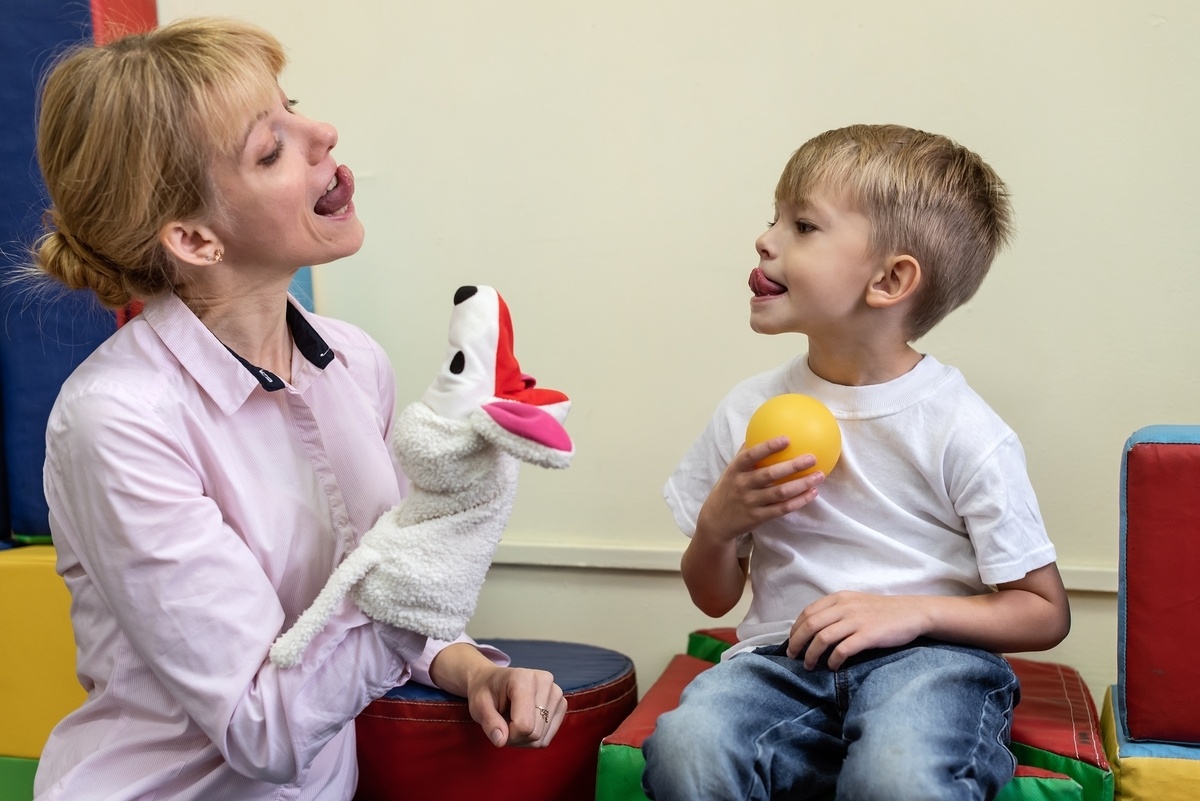
Play is a big part of testing a young or nonverbal child. It gives the SLP a natural way to see how a child actually communicates.
During play, the SLP may watch for things like eye contact, pointing, or simple gestures. These small actions tell a lot, even without a single spoken word.
Toys are often chosen carefully for this reason. A simple toy can reveal a lot about how a child interacts. Rolling a ball back and forth, for example, tests basic turn-taking skills.
This part of the evaluation often feels less like a test and more like a normal playdate. That is by design. A relaxed setting tends to bring out a child’s true communication style.
A stressed or unfamiliar child may not show their full range of skills. Play helps lower that stress, which gives the SLP a more accurate picture overall.
Once testing wraps up, the SLP puts everything together into a report. This report explains what was found and what it means.
Most SLPs share some general feedback with parents right after the appointment. The full written report usually comes a bit later, once everything is scored and reviewed.
This gap can feel long to a worried parent. It exists, though, because scoring formal tests correctly takes real time and careful review.
A parent can always ask for an estimated timeline before leaving the appointment. Most offices are happy to give a general sense of when the full report will be ready.
This report becomes an important document going forward. Schools, therapy programs, and other providers often use it to build a plan around the child’s specific needs.
Parents should keep a copy of this report somewhere safe. It often gets requested again later, sometimes years down the road.
The evaluation results shape what happens next. Every recommendation should connect back to something the SLP actually found during testing.
This is worth asking about directly. A parent can always ask the SLP to explain how a specific result led to a specific recommendation.
For some children, this may point toward regular speech therapy sessions. For others, it may include a referral for AAC. The AAC for nonverbal children guide explains how that kind of communication support usually gets introduced.
Results can also point toward other services. The PT, OT, and Speech Therapy page covers this in more detail. It explains how these services are often combined for children with more than one area of need.
Parents do not need to prepare much for a speech therapy evaluation. A few small steps, though, can make the appointment go more smoothly.
Helpful things to bring or think about ahead of time:
Bringing along someone who knows the child well can also help. That person may notice or remember details a parent forgets in the moment.
It also helps to plan for a slightly longer morning or afternoon than expected. Rushing before an evaluation can add stress that makes the appointment harder for everyone.
Most evaluations take about one to two hours. Younger children often need less time than older children.
No. The SLP is trained to test communication skills in nonverbal children using play, gestures, and observation instead of spoken answers.
Some general feedback is often shared right after the appointment. The full written report usually takes longer to prepare.
No. Testing depends on age, current skills, and the specific concerns raised before the appointment.
A follow-up evaluation may be recommended later. Development can change quickly, especially in young children.
This does not mean nothing was found at all. Sometimes a child’s skills fall just outside a specific cutoff, and a follow-up simply tracks their progress over time.
A speech therapy evaluation can feel like a big step, but it is really just the starting point. It gives everyone involved a clear, shared picture of where a child stands today.
Local families exploring services close to home can also check the Nonverbal Support in Queens, NY page for nearby options.
A speech therapy evaluation is just the first step in a much bigger picture. Our Pediatrics and OPWDD team can help families understand what services often follow, from speech therapy to AAC and beyond.
With offices across Brooklyn, Queens, Staten Island, Bronx, Manhattan, and Nassau, our team is here to help families get started with care.
3820 Nostrand Avenue, Suite 106 Brooklyn, NY 11235
1035 Brighton Beach Ave, Suite 1 Brooklyn, NY 11235
95-20 63rd Rd Rego Park, NY 11374
520 Franklin Ave Garden City, NY 11530

Website Designed by IL Webdesign